You pull into the parking lot just after sunrise, the kids still half asleep in the back seat, and then someone spots it — a deer grazing near the trailhead, or a waterfall glinting through the trees. A national park day trip with kids can be exactly that good, but only if the plan fits a single day and fits your children. The secret is not seeing everything. It is choosing a little, doing it well, and getting home before everyone is exhausted.
Pick the Right Park for One Day
Not every national park suits a single-day family visit. The huge, famous parks can eat a whole day just in driving between viewpoints, and that is the fastest way to turn excited kids into tired, bored passengers. For one day, look for a park within about two hours of home or your hotel, with a compact main area rather than one spread across hundreds of miles of road.
Check the park’s official website before you go and look for three things: which areas are open that week, whether any road or trail is closed, and what the visitor center hours are. Some parks close sections seasonally, and a trail you planned around may be shut for repairs. If you are weighing a mountain park, reading about places to visit near Rocky Mountain National Park shows how much there is to see around one park alone — a good reminder to narrow your list rather than widen it. Smaller and less crowded parks are often the better choice for a first family visit: your kids will remember scrambling over rocks on a short trail far longer than a famous viewpoint seen from a packed parking lot.
Build a Simple One-Day Plan
A realistic one-day plan has three parts and nothing more: one morning highlight, one afternoon highlight, and a flexible middle. Arrive early, ideally within an hour of the park opening, when parking is easy, trails are quiet, and the light is at its best. Head to the visitor center first. Rangers can tell you which trails are in good shape today, where wildlife has been spotted, and which short walk suits your children’s ages — advice no website can match.
Try this schedule: arrive by 9 a.m., visitor center and a short morning trail until about 11:30, a proper lunch and rest break, then one easy afternoon activity such as a scenic drive or a lakeside walk, and head for the exit by 4 or 5 p.m. Leave the last hour unplanned. Kids move slowly, they stop for every interesting rock and beetle, and that is the point.
Choose Trails Your Kids Can Actually Finish
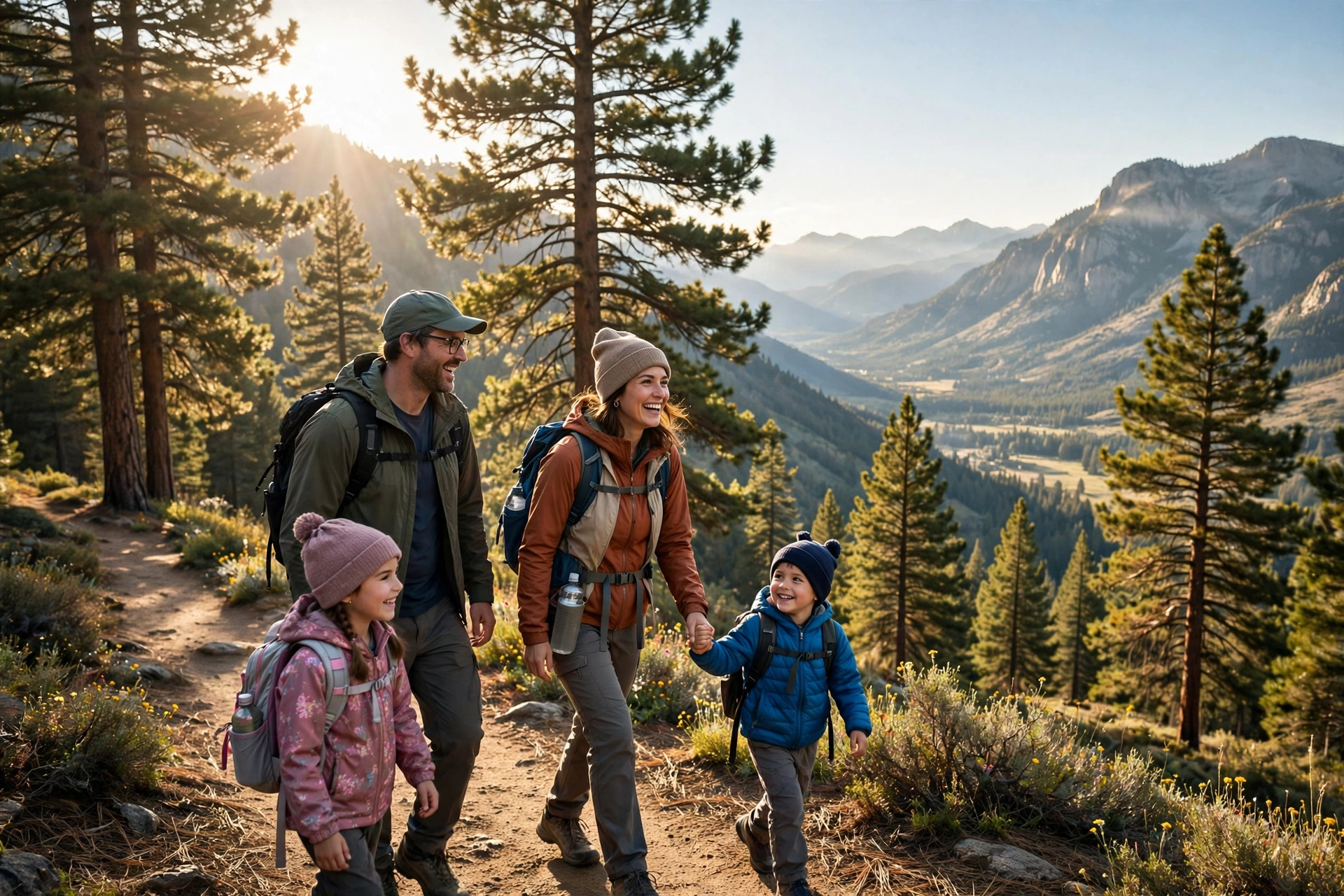
The most common mistake on a family park visit is picking a trail by its scenery instead of by its length and surface. A good kids’ trail for a day trip is short — roughly one to three miles round trip — mostly flat or gently sloping, and with something to look at every few minutes: a stream, a waterfall, a viewpoint, or an interesting rock formation.
Match the trail to your youngest child, not your oldest. A five-year-old who walks a mile happily will still hit a wall at mile three, and carrying a tired child back along a mountain trail is nobody’s idea of a holiday. Check the trail’s elevation gain as well as its distance; a short trail that climbs steeply can be harder than a longer flat one. If the park offers a choice, pick the loop trail over the out-and-back — children stay far more motivated when every step is new ground.
Pack a Day Bag That Covers the Basics
Overpacking is almost as bad as underpacking on a day trip, because you will be carrying everything on the trail. One small backpack per adult is enough for a family day out. Pack water first — more than you think you need, at least a litre per person for a half-day hike — plus snacks your kids will actually eat, sunscreen, hats, a basic first-aid kit with plasters and any regular medication, and a light extra layer for everyone.
Let each child carry their own tiny backpack with a water bottle and a snack. It gives them a sense of ownership over the trip and keeps them from asking you to carry their things after twenty minutes. The same less-is-more thinking applies to any trip: our advice on how to pack light for a week-long trip with only a carry-on uses the same principles on a bigger scale.
Turn the Visit Into a Game
Kids do not experience a national park the way adults do. A viewpoint is a photo stop for you; for a six-year-old it is thirty seconds of looking before the question comes: what are we doing next? Give them a job and the whole day changes. The National Park Service runs a free Junior Ranger program at most parks: children pick up an activity booklet at the visitor center, complete simple activities about the park, and earn a badge when they finish. You can read how it works on the National Park Service Junior Ranger page before your visit.
Even without the booklet, a simple scavenger hunt works wonders. Before you set off, agree on five things to find — a pinecone, a bird, a rock with an interesting shape, a wildflower, an animal track — and let the kids tick them off as they go. Take photos of what they find rather than collecting it: most parks ask visitors to leave rocks, plants and other natural objects where they are.
Food, Water and Rest Breaks
Hungry children stop enjoying everything, so treat food as part of the plan, not an afterthought. Carry lunch even if you hope to buy it in the park — cafes can be closed, crowded or a long drive away — and schedule snack breaks before the kids ask for them. A planned rest every hour, even a five-minute sit on a rock with a drink, prevents the meltdown that comes from pushing on too long. Bring more water than you expect to need and drink on a schedule rather than waiting for thirst, especially on warm days or at altitude. If anyone gets a headache or feels unusually tired on a high-altitude trail, slow down, rest in the shade and drink — and cut the hike short without hesitation.
Stay Safe Without Spoiling the Fun
National parks are wild places, and a few simple rules keep a family day safe. Stay on marked trails: it protects fragile ground and keeps you away from cliffs, unstable slopes and hidden drop-offs. Keep a real distance from wildlife and never feed animals — it is against park rules and dangerous for the animal. Teach children to stay where they can see an adult, and agree on a meeting point at the visitor center or parking lot in case anyone gets separated. Check the weather forecast the night before and again in the morning: mountain weather changes fast, and if storms are forecast, shorten the plan rather than cancelling the day — a visitor center, a short sheltered trail and a scenic drive can still make a good trip.
Frequently Asked Questions
What is the best age to take kids to a national park?
There is no wrong age, but the trip looks different at each stage. Toddlers do best with short paved walks and a carrier; children aged five and up can usually manage a one-to-three-mile trail and enjoy the Junior Ranger activities. Plan around your youngest child.
Do national parks charge an entry fee?
Many parks charge a per-vehicle entry fee, while others are free. Check the specific park’s page on nps.gov before your visit, as fees change.
Can you visit a national park in one day with kids?
Yes — one day is enough for a satisfying visit if you pick a compact park, arrive early, and limit yourself to one or two highlights. Trying to cover a large park in a single day is what makes the trip feel rushed.
Final Thoughts
A national park day trip with kids is not about covering ground. It is about one early start, one trail your children can finish with a smile, a booklet or a scavenger hunt to keep them looking, and getting home with energy to spare. Pick a park close enough to reach easily, keep the plan simple, and let the kids set the pace. What they will remember is not how much you saw — it is the deer at the trailhead and the badge they earned.